




Sagrika
Corrosion is a major challenge for metal components used in automotive, fastener, railway, construction, industrial, and engineering applications. When exposed to moisture, salts, chemicals, and other environmental conditions, unprotected metal surfaces can deteriorate over time.
Zinc flake coating is an advanced protective coating technology designed to provide effective corrosion protection while maintaining controlled coating thickness. Its performance comes from the interaction of several carefully selected components, including zinc flakes, aluminum flakes, binders, curing agents, additives, pigments, and solvents.
Understanding the components of zinc flake coating helps manufacturers and engineers make better decisions when selecting a protective coating for metal parts.
What Is Zinc Flake Coating?
Zinc flake coating is a protective coating system that combines zinc and aluminum flakes with a formulated coating matrix to protect metal substrates from corrosion.
The zinc flakes provide sacrificial protection, while the overall coating structure creates a protective barrier between the metal surface and the surrounding environment.
Depending on the coating formulation, additional components such as binders, additives, curing agents, pigments, and solvents are used to achieve the required application and performance characteristics.
Key Components of Zinc Flake Coating
| Component | Primary Function |
|---|---|
| Zinc flakes | Provide sacrificial corrosion protection |
| Aluminum flakes | Enhance barrier protection and durability |
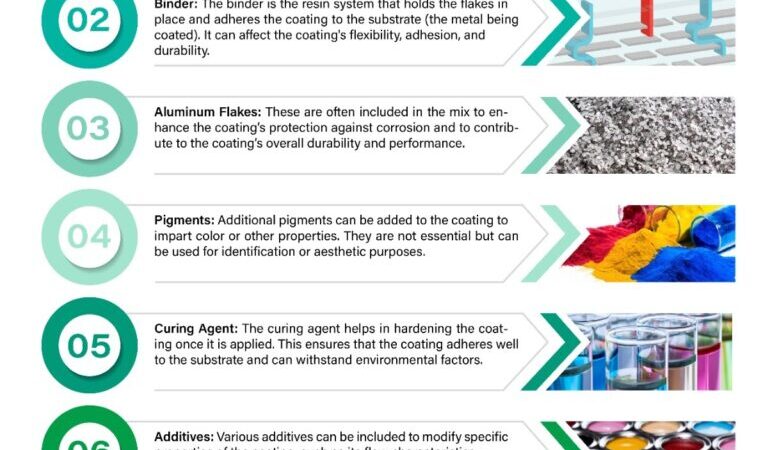
| Binders | Hold coating components together and promote adhesion |
| Curing agents | Help develop the final coating structure |
| Additives | Modify specific performance and application properties |
| Pigments | Provide identification or aesthetic characteristics |
| Solvents | Adjust viscosity and application characteristics |
Each component performs a specific role, but the final performance depends on how these components work together as a coating system.
1. Zinc Flakes: The Foundation of Sacrificial Protection
Zinc flakes are one of the most important components of zinc flake coating.
Zinc provides sacrificial corrosion protection to the underlying metal substrate. In a corrosive environment, zinc can preferentially corrode, helping protect the steel beneath the coating.
This mechanism is particularly important for steel components that require reliable corrosion protection.
The zinc flakes form part of the protective coating structure and contribute to the coating’s ability to protect the substrate from corrosive conditions.
Why Are Zinc Flakes Important?
Zinc flakes contribute to:
- Sacrificial corrosion protection
- Protection of the underlying steel
- Long-term coating performance
- Improved resistance to environmental exposure
The effectiveness of the final coating depends not only on the presence of zinc but also on the complete formulation and application process.
2. Aluminum Flakes: Enhancing Barrier Protection
Aluminum flakes are commonly combined with zinc flakes in zinc flake coating formulations.
While zinc contributes sacrificial protection, aluminum flakes can contribute to the barrier characteristics and durability of the coating system.
The combination of zinc and aluminum flakes creates a layered structure within the coating. This structure helps provide additional protection against moisture and corrosive elements reaching the underlying metal.
Zinc and Aluminum Working Together
The combination can provide a balance of:
- Sacrificial protection
- Barrier protection
- Coating durability
- Resistance to environmental exposure
This combination is one of the key characteristics that makes zinc flake coating suitable for demanding corrosion protection applications.
3. Binders: Holding the Coating Together
The binder is another important component of zinc flake coating.
It acts as the resin or matrix that holds the metallic flakes together and helps establish adhesion between the coating and the metal substrate.
The binder can influence important coating characteristics such as:
- Adhesion
- Flexibility
- Durability
- Coating integrity
- Resistance to environmental conditions
The selection of the appropriate binder system is therefore an important part of coating formulation.
A well-formulated binder system helps ensure that the zinc and aluminum flakes remain integrated within the coating after application and curing.
4. Curing Agents: Developing the Final Coating
After application, the coating needs to develop its final properties through the appropriate curing process.
Curing agents play a role in the hardening and development of the coating structure.
A properly cured coating helps establish:
- Strong adhesion
- Coating durability
- Stable coating properties
- Long-term protective performance
Curing conditions such as temperature and time must be appropriately controlled according to the specific coating system.
This is why curing is an important part of the zinc flake coating process, rather than simply being a final step after application.
5. Additives: Fine-Tuning Zinc Flake Coating Performance
Small quantities of additives may be incorporated into zinc flake coating formulations to modify specific properties.
Depending on the formulation, additives can influence application characteristics and coating performance.
Examples include additives designed to help with:
- Flow characteristics
- Coating stability
- Anti-settling properties
- Wear resistance
- UV resistance
- Application consistency
These components may appear in relatively small quantities, but they can have an important influence on how the coating behaves during storage, application, and service.
6. Pigments: Identification and Appearance
Some zinc flake coating formulations may include additional pigments.
Pigments can be used for different purposes depending on the coating system and customer requirements.
For example, pigmentation may help:
- Identify different coating systems
- Differentiate components
- Provide a specific visual appearance
- Improve the aesthetic characteristics of the finished coating
Pigments are therefore not necessarily responsible for the primary corrosion protection mechanism, but they can provide useful functional or visual characteristics.
7. Solvents: Controlling Application Viscosity
In formulations where solvents are used, they help adjust the viscosity and application characteristics of the coating.
Proper viscosity is important because the coating needs to flow and distribute appropriately over the metal surface during application.
During curing, the solvent component evaporates, allowing the coating system to develop its final structure.
The type and amount of solvent used depend on the specific coating formulation and application requirements.
It is also important to distinguish solvent-based formulations from water-based zinc flake coatings, which use water as the primary carrier.
How Do the Components Work Together?
The performance of zinc flake coating does not depend on one component alone.
Instead, the components work together as a complete coating system.
A simplified mechanism can be understood as follows:
Zinc flakes → Sacrificial protection
Aluminum flakes → Additional barrier characteristics
Binder → Holds the coating structure together
Curing system → Develops the final coating properties
Additives → Fine-tune application and performance
Pigments → Identification and appearance
Carrier/solvent → Helps achieve suitable application characteristics
The final performance therefore depends on the formulation, surface preparation, application method, coating thickness, curing conditions, and quality control.
Why Zinc Flake Coating Is Used for Corrosion Protection
The combination of metallic flakes and a formulated coating matrix allows zinc flake coating to provide several advantages for metal components.
Corrosion Protection
The zinc component provides sacrificial protection, helping protect the underlying steel from corrosion.
Controlled Coating Thickness
Zinc flake coatings can be designed for applications where controlled film thickness is important, including fasteners and precision components.
Suitable for Demanding Applications
The technology is used across industries where metal components require reliable protection against environmental exposure.
Flexible Formulations
Different coating formulations can be developed to meet specific application, environmental, appearance, friction, and performance requirements.
Applications of Zinc Flake Coating
The technology is particularly relevant to industries where corrosion protection and component reliability are important.
Automotive Industry
Zinc flake coatings are widely associated with automotive components and fasteners where corrosion resistance, dimensional control, and reliable performance are required.
Fasteners
Bolts, nuts, screws, and other fasteners can benefit from protective coating systems designed to provide corrosion resistance while maintaining required dimensional and friction characteristics.
Railway
Railway components can be exposed to outdoor environments, humidity, moisture, and changing temperatures. Protective coating systems can help improve the durability of suitable metal components.
Industrial Engineering
Industrial equipment and engineered components may require protection against atmospheric and industrial corrosion.
Renewable Energy
Wind energy and other renewable energy applications involve components operating outdoors for extended periods. Corrosion protection can therefore be an important consideration in suitable applications.
Zinc Flake Coating: More Than Just Zinc
It is easy to think of zinc flake coating simply as a layer of zinc. However, the technology involves a carefully formulated system in which each component contributes to the final result.
The zinc flakes provide sacrificial protection.
The aluminum flakes contribute to the protective structure.
The binder provides cohesion and adhesion.
The curing system helps develop the final coating.
Additives modify specific characteristics.
Pigments can provide identification or appearance.
The carrier or solvent helps achieve suitable application characteristics.
Together, these components create a protective coating system designed for demanding metal protection requirements.
Frequently Asked Questions About Zinc Flake Coating
What are the main components of zinc flake coating?
The main components can include zinc flakes, aluminum flakes, binders, curing agents, additives, pigments, and a carrier such as water or solvent, depending on the formulation.
What is the role of zinc in zinc flake coating?
Zinc provides sacrificial corrosion protection. It preferentially corrodes under suitable conditions, helping protect the underlying steel substrate.
Why are aluminum flakes used in zinc flake coating?
Aluminum flakes contribute to the protective barrier structure and can enhance the overall durability and corrosion protection characteristics of the coating system.
What does the binder do in zinc flake coating?
The binder helps hold the zinc and aluminum flakes together and promotes adhesion between the coating and the metal substrate.
Why is curing important in zinc flake coating?
Curing helps the coating develop its required final structure, adhesion, durability, and protective characteristics.
Are all zinc flake coatings solvent-based?
No. Zinc flake coatings are available in different formulations, including water-based and solvent-based systems, depending on the coating technology and application requirements.
Where is zinc flake coating used?
Zinc flake coating is used for suitable components across automotive, fastener, railway, industrial, renewable energy, and other engineering applications requiring corrosion protection.
How does zinc flake coating protect against corrosion?
It combines sacrificial protection from zinc with the barrier characteristics of the coating structure. The overall protection depends on the formulation, application, thickness, curing, and service conditions.
Conclusion: Understanding the Technology Behind Zinc Flake Coating
Zinc flake coating is a sophisticated corrosion protection technology in which multiple components work together to protect metal substrates.
From zinc and aluminum flakes to binders, curing agents, additives, pigments, and carriers, every component can influence the coating’s application and final performance.
Understanding these zinc flake coating components is important when selecting a coating system for automotive fasteners, industrial components, railway applications, renewable energy equipment, and other metal parts.
At Aum Dacro Coatings, we focus on delivering reliable zinc flake coating solutions for demanding industrial applications. Our expertise in coating application, process control, and quality testing helps customers select solutions based on their component and performance requirements.
Looking for the right zinc flake coating solution for your components? Contact Aum Dacro Coatings to discuss your corrosion protection requirements.
For more Information – CLICK ME!